What Heart Rate Zone Should You Actually Target During a Stair Workout?
Quick Answer: For fat-burning and building an aerobic base, target 60-70% of your max heart rate with a steady, sustainable pace. For building cardiovascular power and speed, intervals pushing into 80-90% for short bursts (1-2 minutes) with recovery between are more effective. Because stairs spike heart rate faster than flat cardio, most people overshoot their intended zone without realizing it.
Stair climbing’s incline means your heart rate climbs faster per minute of effort than running or cycling at a similar perceived exertion — which means the usual ‘just go by feel’ approach tends to push people into a harder zone than they meant to target.

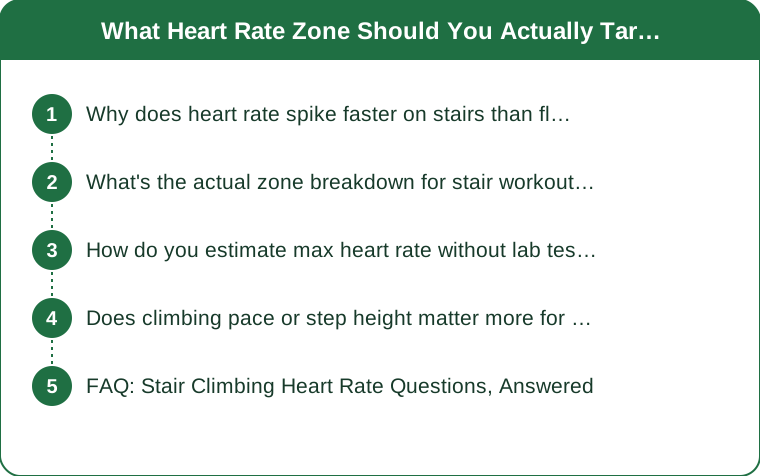
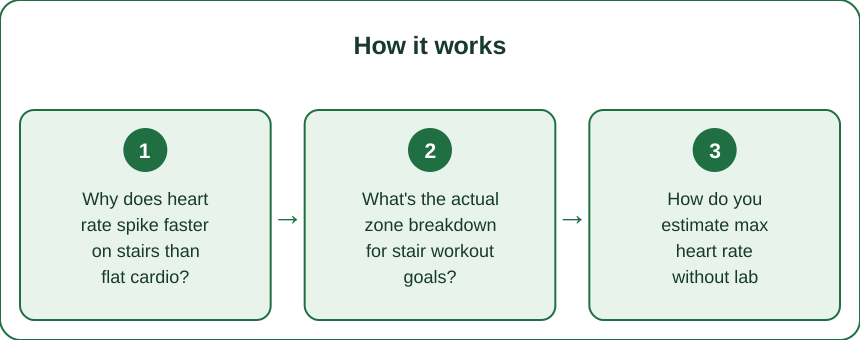
Why does heart rate spike faster on stairs than flat cardio?
Climbing recruits a larger combined muscle mass (glutes, quads, calves) working directly against gravity with every step, which demands more oxygen delivery per minute of activity than flat-ground movement at a similar pace. This is the core reason a stair session at what feels like a moderate effort often reveals a heart rate that’s already in a harder zone than intended once you actually check a monitor.
This isn’t a flaw in stair training — it’s part of why it’s such an efficient cardio option — but it does mean pace-based effort judgment is less reliable on stairs than heart rate tracking is.
What’s the actual zone breakdown for stair workout goals?
Zone 2 (60-70% max HR) — sustainable, conversational-pace climbing, best for building aerobic base and burning fat as the primary fuel source over a longer duration (20-40+ minutes).
Zone 4-5 (80-90%+ max HR) — short, hard bursts (1-2 minutes climbing hard, followed by 1-2 minutes easy or resting) for building cardiovascular power, VO2 max, and overall fitness ceiling. This is where interval-style stair workouts (climb hard, walk down to recover) live.
Spending most sessions bouncing in the uncomfortable middle zone (roughly 70-80%) is common but generally less efficient for either specific goal than deliberately targeting one end or the other.

How do you estimate max heart rate without lab testing?
The common formula (220 minus age) is a rough population average, not personalized — it can be off by 10-20 beats per minute for a meaningful portion of people, particularly those who are highly trained or have some individual cardiovascular variation. It’s a reasonable starting estimate, not a precise number.
A more useful practical anchor for most people: your actual observed max heart rate during genuinely maximal effort (a hard interval session where you truly can’t push harder) tends to be more accurate than the formula once you have that data point from a real session.
Does climbing pace or step height matter more for hitting a target zone?
Pace matters more than step height for heart rate response — a fast pace on standard-height steps typically raises heart rate more than a slow pace on taller steps, since heart rate tracks overall work rate and oxygen demand more closely than the specific mechanics of any single step. Adjusting pace is the more direct lever for moving between zones than changing which stairs you use.
That said, taller or steeper stairs at the same pace do add some extra demand, so if you switch locations (a stadium versus a standard office stairwell), expect your zone at a given pace to shift somewhat and adjust rather than assuming pace alone transfers directly.
FAQ: Stair Climbing Heart Rate Questions, Answered
Do I need a heart rate monitor, or can I estimate zones by feel?
Rate of perceived exertion is a reasonable substitute if you don’t have a monitor, but given stairs’ faster heart rate spike, expect to underestimate your actual zone by feel alone more than you would with flat cardio.
Is it bad to accidentally stay in a hard zone for a full session?
Occasionally, no — but consistently training only in a hard zone without easier recovery sessions increases injury and burnout risk over time and doesn’t actually build aerobic base as effectively as some zone 2 work mixed in.
Does fitness level change which zone feels sustainable?
Yes significantly — a well-trained person can sustain a faster pace at the same heart rate percentage than a beginner, which is part of why zone-based targets (percentage of max HR) are more useful across fitness levels than a fixed pace target would be.
TL;DR:
- Stairs spike heart rate faster than flat cardio due to gravity-resisted, large-muscle recruitment
- Zone 2 (60-70% max HR) for aerobic base and fat-burning, steady sustainable pace
- Zone 4-5 (80-90%+) in short intervals for cardio power and fitness ceiling
- Pace is the more direct lever than step height for shifting between zones
Check an actual heart rate reading rather than relying on feel alone — stairs are one of the cardio formats where perceived effort and actual zone drift apart the most.
Keep Reading
This article is for general informational and styling purposes only. Fit, sizing, and product availability may vary.