Stairs and Aging: The Strength, Technique and Home Fixes That Keep Stairs Safe for Decades
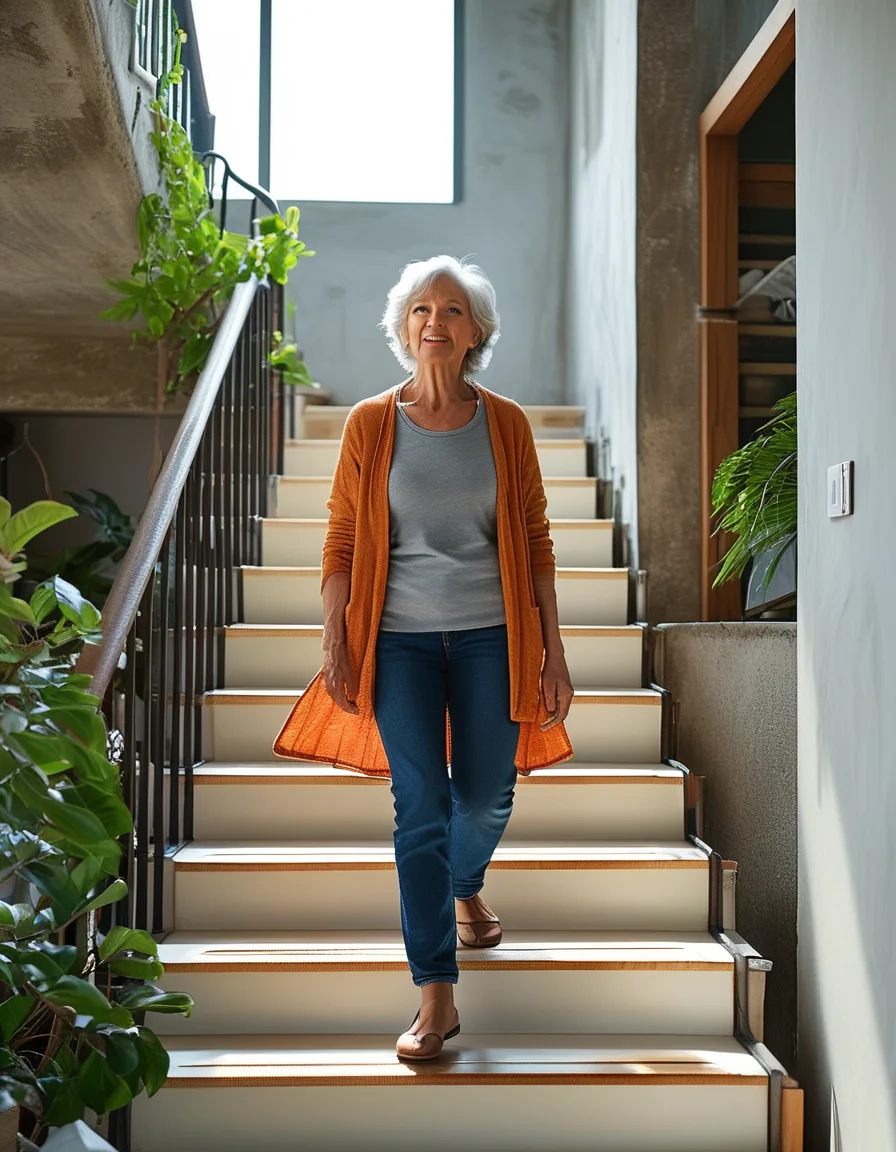
The staircase is where aging gets tested daily — the falls statistics are sobering, and the capacity that prevents them is trainable — which makes stairs both the risk and the gym. The stairs-and-aging guide: the reality, the program and the modifications.
The Risk Reality
Naming the stakes: the falls statistics (the stairs featuring heavily in serious falls for older adults — the descent being the danger direction: the majority of stair falls happening going DOWN; the eccentric-control demand from the landing doctrine), the capacity connection (the stair difficulty predicting broader decline — the stairs-as-assessment from the longevity doctrine; the avoided stairs accelerating the weakness that made them hard per the use-it doctrine), the risk-factor inventory (the leg-strength and balance declines, the vision changes, the medication dizziness, the footwear and lighting factors — the multifactor picture from the falls doctrine), the fear spiral (the stair anxiety reducing use reducing capacity — the confidence loop from the balance doctrine; the avoidance being the risk multiplier), and the trainability headline (the stair capacity rebuilding at every age — the strength-and-balance evidence from the muscle-aging doctrine; the stairs kept by training FOR them).

The Capacity Program
Training for stairs: the step-up foundation (the low step-up as the stairs’ own exercise — the height-progressed loading from the leg doctrine; the controlled step-DOWN practice being the descent’s rehearsal per the eccentric doctrine), the leg-strength core (the sit-to-stand progressions from the longevity doctrine — the chair squats to loaded versions; the twice-weekly dose from the muscle doctrine), the balance thread (the single-leg stands and the reaching-balance work from the balance doctrine — the stair-relevant transitions; the handrail-light practice), the power maintenance (the brisk-step work for the catch-yourself capacity — the safe-speed training from the masters doctrine), the calf-and-ankle support (the heel raises and the ankle mobility from the respective doctrines — the push-off and the landing control), the daily-stairs prescription (the home stairs USED deliberately as training — the extra trips per the NEAT doctrine; the avoided stairs being surrendered ground), and the program shape (the 15-minute routine three times weekly — the step-ups, sit-to-stands, balance and heel raises; the minimal doctrine at fall-prevention stakes).
The Technique-and-Home Fixes
The stairs made safer: the technique upgrades (the whole-foot placement, the handrail USED without shame — the descent slowed deliberately; the no-carrying-blind rule: the laundry basket that hides the steps; the turn-on-the-landing habit over the mid-stair pivot), the lighting overhaul (the stairwell lighting being the cheapest fall prevention — the switches at both ends, the motion-sensor nightlights for the 2am trips per the home doctrine), the surface fixes (the loose-carpet and worn-tread repairs — the contrast-tape edge marking for the vision-changed; the clutter-free steps law), the handrail audit (the rails on BOTH sides ideally — the graspable-diameter check; the rail extending the full run; the installation being cheap versus the alternative), the footwear rules (the backless-slipper ban on stairs — the grippy-soled house shoes from the standing doctrine), the glasses note (the multifocal-lens depth-distortion on stairs — the head-tilt habit or the single-vision stair strategy discussed with the optometrist per the vision doctrine), the medical layer (the dizziness-and-medication review with the doctor — the vision checks current per the medical doctrine), and the closing frame (the stairs kept by a three-part deal — the capacity trained, the technique respected, the environment fixed; the staircase as the daily test you keep passing; the decades of second floors, secured). Train step-downs, light the stairwell, use the rail proudly: the stairs, kept for life.
Most stair falls happen going DOWN — train for it: step-ups AND controlled step-downs, sit-to-stands, single-leg balance and heel raises, 15 minutes three times weekly. Then fix the environment: lighting at both ends, rails both sides, no backless slippers, no carrying loads that hide the steps — and use the rail without shame.
Keep Reading
This article is for general informational and styling purposes only. Fit, sizing, and product availability may vary.