Why Stair Climbing Feels So Much Harder Than Your Heart Rate Monitor Suggests
Quick Answer: Stair climbing relies heavily on concentrated muscular effort in the quads and glutes working against gravity directly, which creates high local muscle fatigue and perceived effort that can outpace what your heart rate zone alone reflects — heart rate measures cardiovascular load, not localized muscular burn, and stairs stress the two very differently than flat-ground cardio does.
Your heart rate monitor shows a perfectly reasonable moderate zone. Your legs, meanwhile, are burning like you’re in an all-out sprint. Both readings are accurate — they’re just measuring two different things that stairs push apart more than most other cardio.

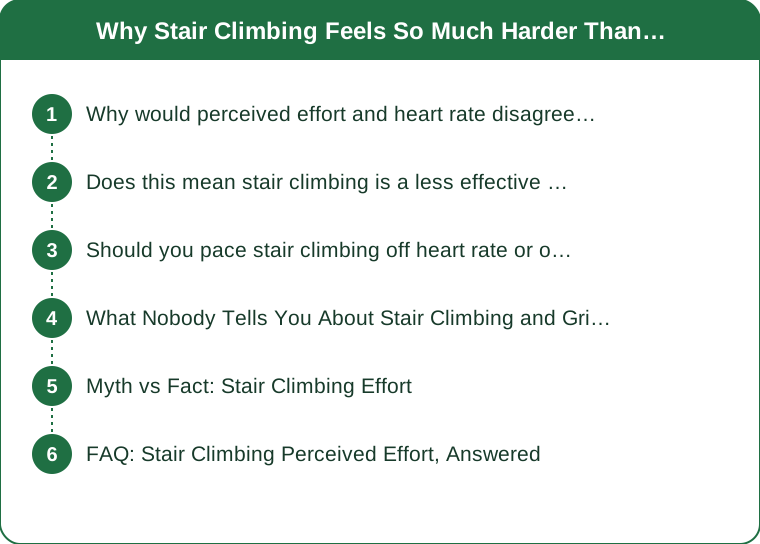
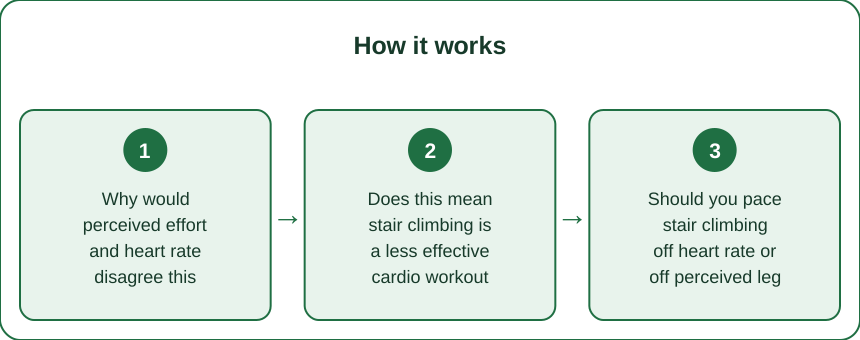
Why would perceived effort and heart rate disagree this much specifically on stairs?
Heart rate reflects cardiovascular demand — how hard your heart and lungs are working to deliver oxygen. Stair climbing requires your quads and glutes to repeatedly lift your full body weight directly against gravity with each step, which creates significant localized muscular fatigue and lactate buildup in those specific muscles, a burn that can feel intense even while your cardiovascular system is working at a comparatively moderate, sustainable rate.
Does this mean stair climbing is a less effective cardio workout than the heart rate suggests?
Not necessarily less effective — it means it’s training a different combination of systems simultaneously (cardiovascular plus concentrated leg strength endurance) compared to something like flat-ground jogging, which is more purely cardiovascular. The high perceived leg effort reflects real muscular work being done, even if your heart rate zone doesn’t fully capture that dimension of the exertion.
Should you pace stair climbing off heart rate or off perceived leg effort?
For most people, using perceived leg fatigue as the primary pacing signal on stairs makes more practical sense than heart rate alone, since heart rate can under-represent how close you are to muscular failure specifically in your legs. Slowing down when leg burn becomes sharp, rather than waiting for heart rate to hit a specific number, better protects against form breakdown and injury risk on stairs.

What Nobody Tells You About Stair Climbing and Grip/Rail Use
Here’s a detail rarely discussed: lightly using a handrail for balance and slight assistance, rather than avoiding it entirely for a ‘harder workout,’ actually allows better pacing and form control on longer stair sessions — some people avoid rails assuming it makes the workout less effective, but a small amount of upper body assistance mainly reduces excess strain on fatiguing legs without meaningfully reducing the cardiovascular and muscular benefit of the climb itself.
Myth vs Fact: Stair Climbing Effort
Myth: Heart rate zone alone tells you how hard a stair workout really is. Fact: Stairs create localized leg fatigue that heart rate doesn’t fully capture — perceived leg effort matters too.
Myth: Using the handrail means you’re not working hard enough. Fact: Light rail use for balance and pacing doesn’t meaningfully reduce the workout’s cardiovascular or muscular benefit.
Myth: If your heart rate zone looks moderate, you can safely push harder on stairs. Fact: Sharp leg burn is a meaningful signal on its own, separate from what heart rate zone indicates.
FAQ: Stair Climbing Perceived Effort, Answered
Should I trust my heart rate monitor at all during stair workouts?
Yes, it’s still useful for overall cardiovascular tracking — just don’t rely on it exclusively for pacing when your legs are clearly signaling something different.
Does this mismatch mean stair climbing burns more calories than the heart rate zone suggests?
Often yes, since the additional localized muscular work isn’t fully reflected in heart-rate-based calorie estimates, which tend to underestimate stair climbing’s total energy cost.
How can I build up stair climbing tolerance so the leg burn feels less intense over time?
Consistent, gradually increasing stair sessions over several weeks build the specific muscular endurance in quads and glutes that reduces how quickly that intense localized burn sets in.
TL;DR:
- Stair climbing creates high localized leg fatigue that heart rate zones don’t fully capture, since heart rate measures cardiovascular, not muscular, load
- The mismatch means it’s a different kind of training stress, not a less effective workout
- Perceived leg effort is a more practical pacing signal on stairs than heart rate alone
- Light handrail use for balance doesn’t meaningfully reduce the workout’s real benefit
Next stair session, pace off how your legs actually feel rather than only watching your heart rate number — the burn is telling you something real that the monitor alone won’t show.
Keep Reading
This article is for general informational and styling purposes only. Fit, sizing, and product availability may vary.