Why Taking Two Steps at a Time Changes the Workout Completely
Quick Answer: Single stepping is a cardiovascular task at a moderate range of motion. Double stepping roughly doubles the hip and knee flexion per stride, which converts it into a single leg strength exercise performed repeatedly. Glute and quadriceps demand rises substantially, stride rate falls, and the limiting factor shifts from breathing to legs. Both are useful, and they train different things.
Same staircase, two different workouts. Choose deliberately.
What actually changes between one step and two?
The range of motion per stride, and that changes everything downstream.
Single stepping requires a relatively modest amount of hip and knee flexion per step, repeated at a high rate. The cost is mostly cardiovascular — a lot of moderate contractions in quick succession.
Double stepping roughly doubles the vertical distance per stride, which means substantially deeper hip and knee flexion and far more force required from one leg to raise the whole body that distance.
The consequences:
Glute involvement rises significantly. Hip extension from a deeper flexed position is where the gluteus maximus does most of its work, and single stepping never reaches that range. This is the main reason double stepping feels so different in the days afterwards.
It becomes a single leg strength exercise. Each stride is functionally a step up onto a high box, done repeatedly under bodyweight. That is a strength stimulus, not just a conditioning one.
Stride rate falls and force per stride rises. Fewer, harder efforts rather than many moderate ones.
The limiter changes. Single stepping usually stops you because of breathing; double stepping usually stops you because your legs are done, which is a completely different training signal.
Balance demand increases. More time on one leg, at a greater range, with a higher centre of mass. This has real value and it also raises the consequences of a misstep.
So the same staircase can be an aerobic session or a strength session, and the only variable is the step pattern.
Which one should you actually be doing?
Both, for different purposes, and the choice depends on what you are training.
Single stepping for cardiovascular work. Sustained climbing at a high stride rate raises heart rate fast and holds it. It is also lower risk, easier to sustain for long durations, and easier to control, which makes it the better default for general fitness and for longer sessions.
Double stepping for strength and power. Sets of shorter duration, with recovery between, treating it like a strength exercise rather than a cardio one. Six to ten flights of double stepping with walk down recovery is a genuinely hard leg session, and it will produce soreness in a way single stepping does not.
Mixed within a session works well: a few flights double, then single to recover while continuing to move, then double again. This is effectively an interval session with an in built recovery mode.
Practical guidance for double stepping specifically:
Drive through the whole foot, not the toes. Pushing from the ball of the foot only shifts everything to the calves and reduces glute involvement.
Use the handrail lightly for balance, not for pulling. Pulling yourself up with the arms removes exactly the load you came for.
Lean slightly forward from the hips. This puts you over the working leg and increases glute engagement, and it is more comfortable than staying vertical.
Walk down, always. Descending stairs is eccentrically demanding and it is where the falls happen. Running down doubles both the soreness and the risk, and it adds very little.
Start with fewer flights than you think. Double stepping produces more soreness than almost anything else at the same perceived effort, because the eccentric and deep range work is unfamiliar.
What Nobody Tells You About Stair Training
Soreness is delayed and larger than expected. Deep range single leg work plus the eccentric load of descending produces genuine delayed onset soreness, and the first session catches people out badly. Do a third of what you think you can on the first attempt.
Going down is where injuries occur. Descending loads the quads eccentrically and requires more control than ascending, and fatigue at the end of a session is exactly when foot placement gets sloppy.
Knee position matters more when double stepping. Deeper flexion under bodyweight means the knee tracks through a larger range, and if it is collapsing inward that pattern is now happening under more load.
Height of the step changes the exercise as much as the pattern. A shallow staircase double stepped may be easier than a steep one single stepped, so comparing sessions across different staircases is not meaningful.
It is unusually time efficient. Few exercises produce this much cardiovascular and strength stimulus per minute, which is why stadium and stairwell sessions persist among people short of time.
Hip mobility limits it before strength does for some people. If you cannot get into the deeper flexed position comfortably, double stepping will feel wrong rather than hard, and that is a mobility signal rather than a reason to push through.
How should stair sessions change as the season turns?
Significantly, because outdoor stairs become a different and less forgiving surface.
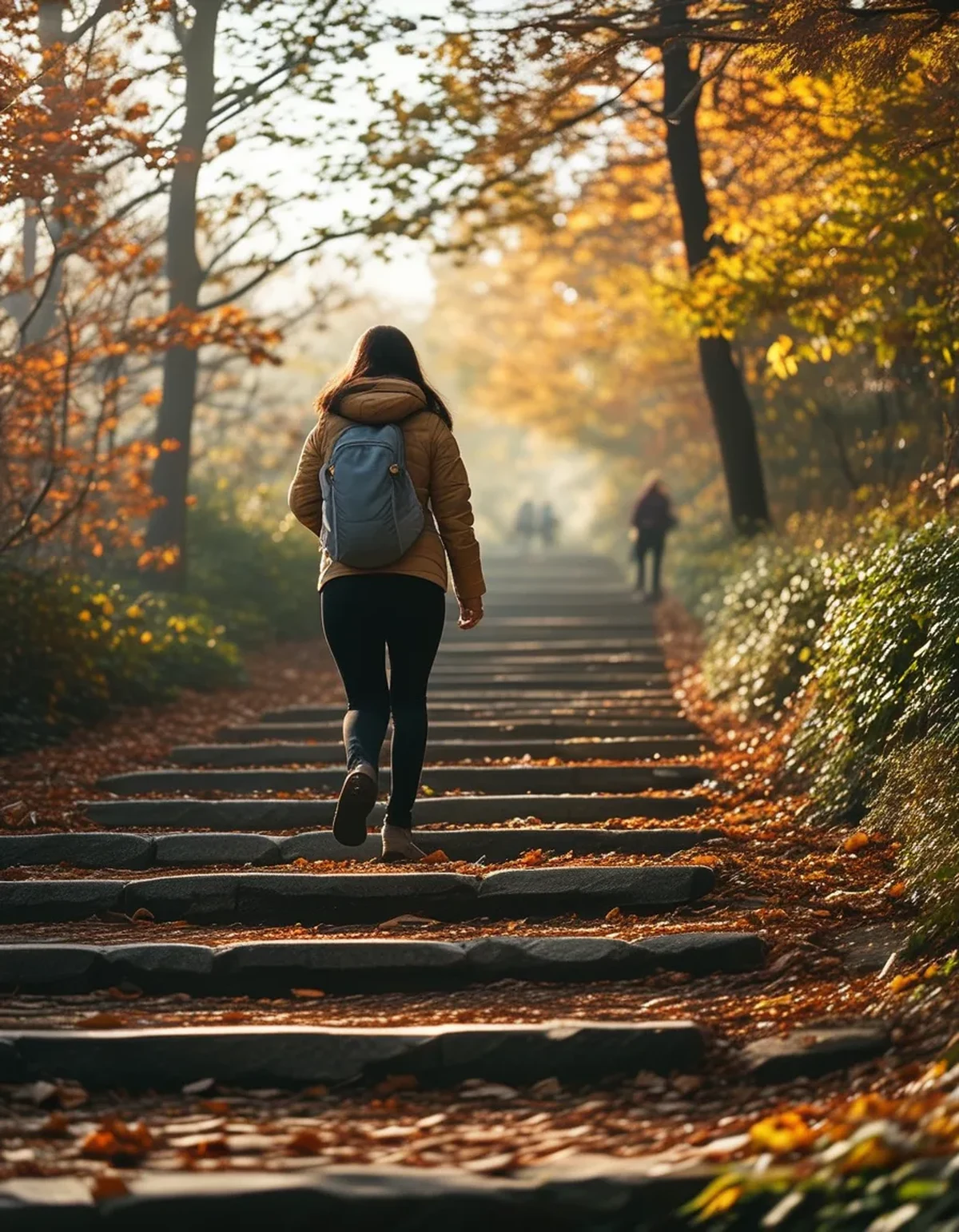
Wet stairs are genuinely hazardous. Leaves, rain, and moss on outdoor steps reduce grip sharply, and the risk is highest on descent when you are tired. This is the main practical change for autumn, and it is worth taking seriously rather than adjusting slightly.
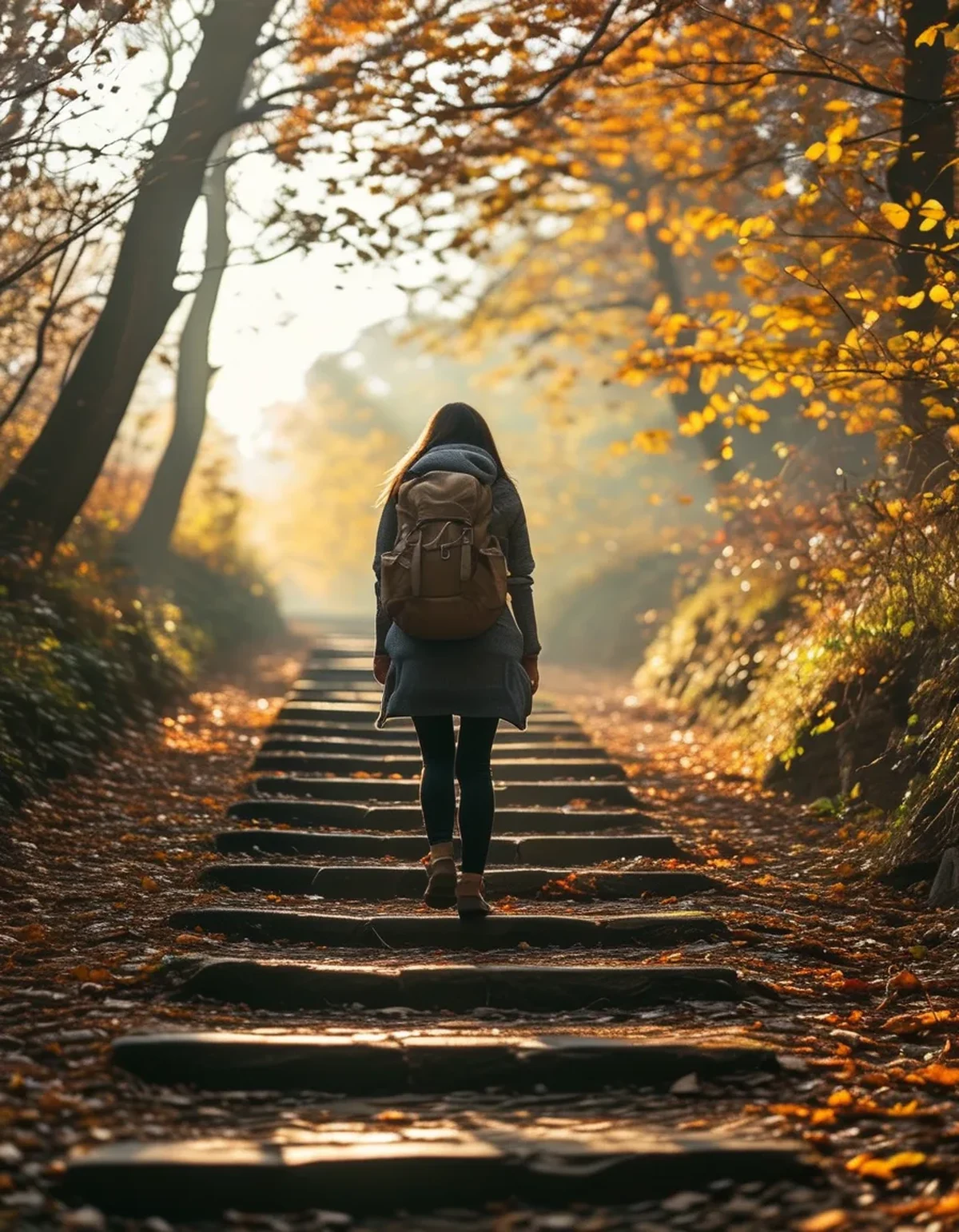
Leaf cover hides the edge of the step, which is the specific hazard. A step you cannot see the edge of is a step you can misjudge, and that is how ankles get turned.
Light disappears from the times most people train. Outdoor stair sessions before work or after work move into darkness through autumn, and poorly lit outdoor steps are not a good place to be doing repeated fast movements.
Cold muscles need more warm up. Double stepping starts at a deep range of motion from the first stride, and cold hips and quads going straight into that is a strain waiting to happen. Five to ten minutes of easy movement first, always, and more as it gets colder.
Practical adjustments:
Move indoors for the harder sessions. A stairwell, a car park, or a gym stair machine removes the surface and light problems entirely.
Single step when the surface is wet, since the deeper stride and higher foot placement of double stepping is much less forgiving of a slip.
Choose shoes with actual tread. Worn smooth soles on wet stone are the specific combination to avoid.
Take the descent slowly and deliberately in poor conditions, and consider walking down a different, safer route if one exists.
This is general exercise information. Stair climbing is high impact on the knees and demanding cardiovascularly, and if you have knee problems, balance issues, a heart condition, or are returning to exercise after a break, check with a doctor or physiotherapist before adding hard stair sessions.
FAQ: Stair Workout Questions, Answered
Is two steps at a time better than one?
Neither is better; they train different things. Double stepping is closer to a single leg strength exercise, and single stepping is closer to a cardiovascular one. Most people benefit from both in different sessions.
Why am I so much more sore after double stepping?
Deeper hip and knee flexion under bodyweight, plus the eccentric load of walking down, both produce more muscle damage than the shorter range of single stepping. The soreness usually peaks a day or two later.
Should I run down the stairs too?
No. Descending is eccentrically demanding, it is where falls happen, and it adds a lot of soreness for very little training benefit. Walk down and treat it as your recovery.
How many flights should I start with?
Fewer than you think — perhaps a third of what feels possible on the first session. Stair soreness is delayed and substantially larger than the effort suggests at the time.
TL;DR:
- Double stepping roughly doubles hip and knee flexion per stride, turning a cardio session into a repeated single leg strength exercise.
- Glute demand rises sharply, stride rate falls, and the limiter shifts from breathing to legs.
- Single step for sustained cardiovascular work, double step in short sets with walk down recovery, and always walk down.
- Wet leaves, hidden step edges, and darkness make outdoor stairs the main autumn hazard, so move the hard sessions indoors.
On your next session, do three flights double stepped and notice where the fatigue is. It will not be your lungs.
Keep Reading
This article is for general informational and styling purposes only. Fit, sizing, and product availability may vary.